
Building Protection
Crack Injection
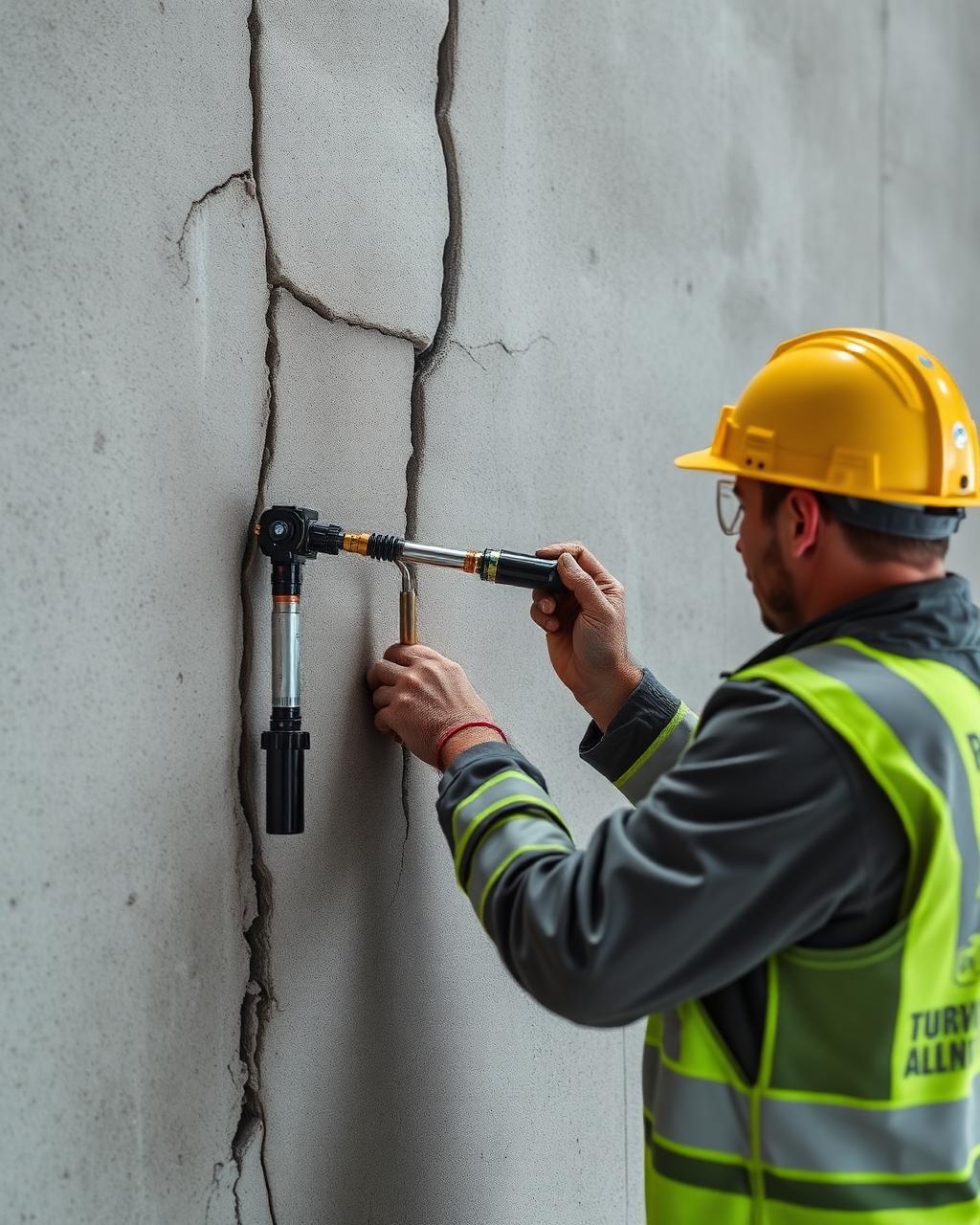
Resin and grout injection that seals active leaks and restores monolithic strength.
The engineering brief
What crack injection involves
Cracks are injected either to stop water flow or to restore structural continuity — the objective determines the resin.
Polyurethane grouts seal actively leaking cracks; epoxy resins structurally weld dormant cracks back together.
Key benefits
Stops active water
Stops active water ingress immediately
Restores structural continuity
Restores structural continuity
No excavation or
No excavation or breakout required
Works from the
Works from the negative side
Verified by post-injection
Verified by post-injection core testing
Our process
How we deliver crack injection
Site Survey
Moisture mapping, substrate testing and photographic condition survey of every affected area.
Technical Proposal
Specification, system build-up, quantities and programme issued with consultant-ready documentation.
Surface Preparation
Mechanical grinding, shot blasting or high-pressure cleaning to achieve the specified profile.
System Application
Certified applicators install the approved system in controlled lifts with wet-film thickness checks.
Testing & Handover
Flood testing, adhesion pull-off tests, as-built records and a written warranty.
On site
Representative works
Related of work
Where we have installed this system
Next step
Discuss your crack injection requirement
An engineer attends site within one working day, diagnoses the root cause and issues a written specification — no obligation.