
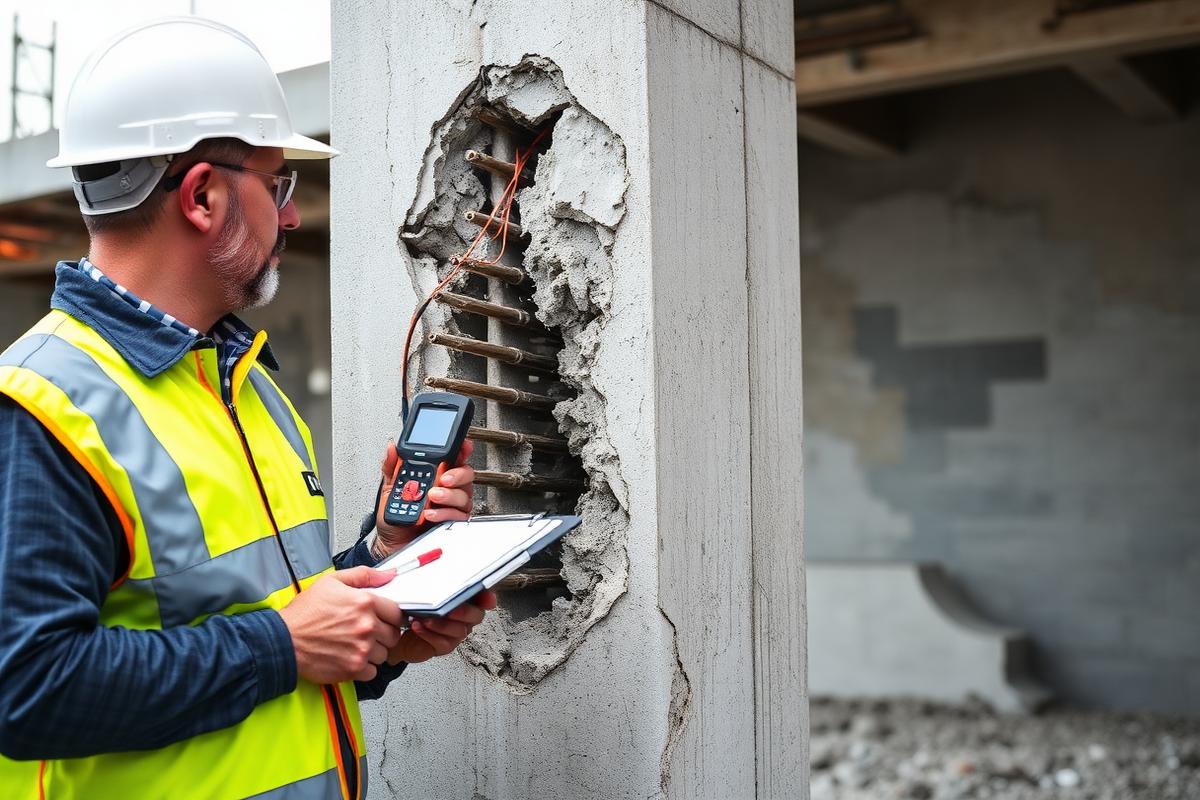
Visible spalling represents the end of the corrosion process, not its extent. By the time concrete has cracked and fallen, the surrounding area is usually already contaminated.
A defensible survey combines delamination mapping, cover meter readings, carbonation depth testing with phenolphthalein, chloride profiling from drilled dust samples, and half-cell potential mapping.
Those five datasets together define the true breakout extent — typically 30 to 60 percent larger than the visible damage.
Skipping this stage is why so many repairs fail within two years: the patch itself becomes an incipient anode, accelerating corrosion in the untreated concrete immediately around it.